
Safety and compliance above all else
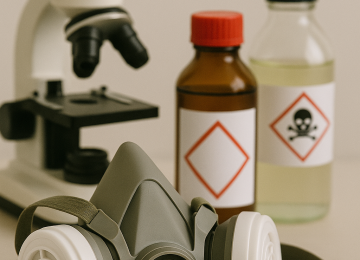
Before starting renovations, or whenever in doubt, it is essential to check for the presence of asbestos fibers or harmful chemicals in your environment.
We perform detection tests that comply with CNESST and municipal standards, making it possible to identify chemical pollutants, solvents, glues, paints or volatile organic compounds (VOCs), and total suspended solids (TSS) .
These analyses help prevent lung diseases and exposure risks, ensuring an indoor environment that is healthy, safe, and compliant.
- Detection tests for volatile chemical pollutants (VOCs), suspended particulate matter (SPM) and toxic substances in indoor air.
- Identification of the origin of chemicals, glues, paints, solvents or recent materials.
- Assessment of possible effects: migraines, irritation, concentration disorders, neurological effects.
- Sampling of suspect air or materials before or during renovation work.
- Tests for the presence and concentration of asbestos fibers in the air.
- Compliant with CNESST and municipal requirements.
- Prevention of lung diseases and contamination risks during work or incidents.
FAQ
Before renovation work, or whenever indoor air quality is in doubt, it is essential to verify the presence of asbestos or chemical pollutants.
These substances can have serious health effects when inhaled, even in very small quantities.
The Laboratoire Notreau offers fast, accurate analyses to guarantee the safety of your occupants and ensure that your spaces comply with health and regulatory standards.
Below are the most frequently asked questions about this service.
Asbestos is a highly toxic fibrous material, classified as carcinogenic.
Even at low concentrations, its fibers can cause serious lung diseases (asbestosis, mesothelioma, lung cancer) when inhaled over time.
An analysis identifies its presence in the indoor air, particularly during renovation or demolition.
An analysis is recommended before any renovation in a building constructed before 1990, after damage to materials (insulation, plaster, ceiling tiles), or if the air quality of an environment seems compromised.
Our analyses target volatile organic compounds (VOCs), suspended particulate matter (SPM) and toxic substances released by glues, paints, solvents or recent materials.
These contaminants can cause migraines, irritation, concentration disorders or neurological effects.
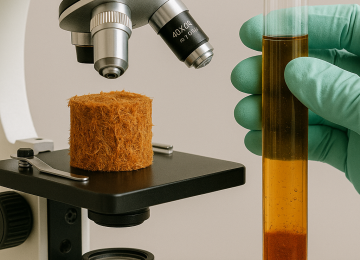
Our experts perform air sampling or collection of suspect materials, depending on the situation.
Samples are then analyzed in the laboratory using recognized methods compliant with CNESST and municipal requirements.
Our report includes tailored recommendations: removal of materials, ventilation, decontamination or specialized intervention.
Quick action helps prevent lung diseases and contamination risks during work or incidents.